Hatch Blog
The Confidence Conundrum: It Is Okay to Say "I Don't Know"
One of the most intimidating parts of stepping into leadership is the expectation that you suddenly hold all the answers. How do you project confidence while remaining truthful when you are out of your depth?
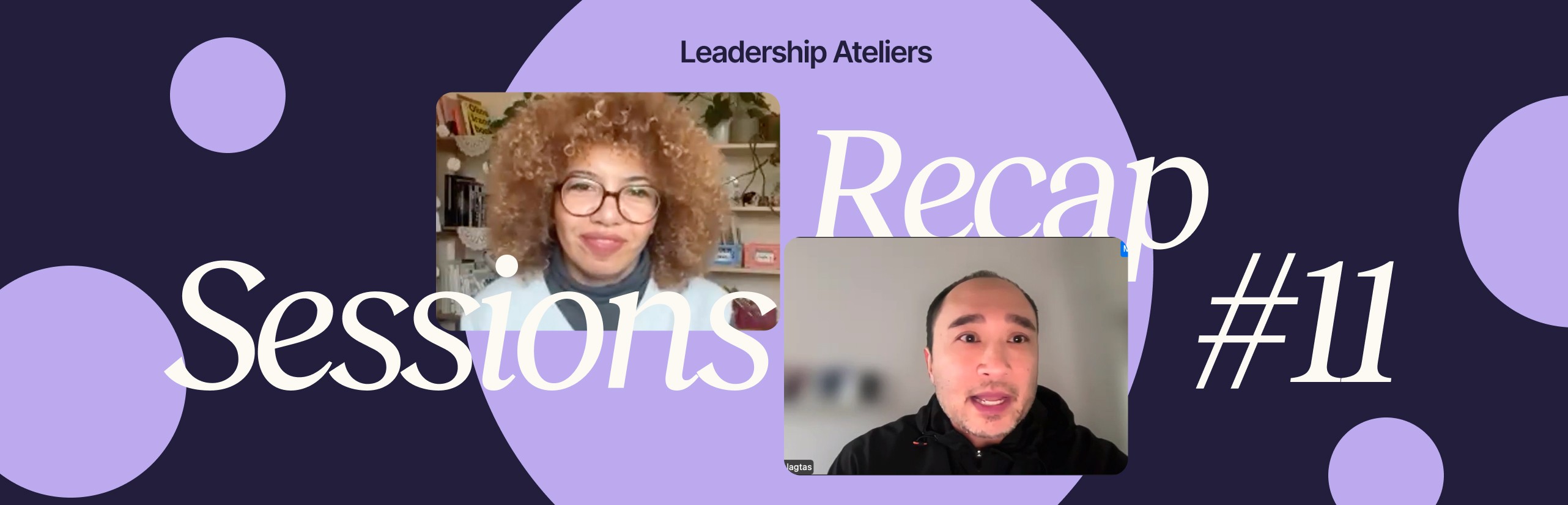
Phil Balagtas suggests framing your understanding through the Rumsfeld Matrix, a framework that categorizes knowledge into known knowns, known unknowns, and unknown unknowns.
When you are thrown into an unfamiliar project or industry, you cannot fake expertise you do not have. Instead, you should:
Lean into what you do know: You might not know the nuances of a highly specific financial sector, but you know how to conduct user research, facilitate a workshop, or structure a problem.
Embrace transparency: Tell your team, "There are some things we don't know here, but this is my thinking process for how we are going to figure it out."
Open the floor: Melin advises turning moments of uncertainty into collaborative decisions. Say, "I am not 100% sure on this. I would like to double check, but maybe we can try this approach. What does everybody think?" People genuinely want to chip in.
Motivation is About 360 Degree Wellbeing
You cannot simply inject magic into a team to make them motivated, especially during high stress periods or dreary winter months. Motivation is the byproduct of an environment built on ongoing trust and appreciation.
To build a resilient team, you have to look beyond the design work:
Design the people, not just the product: Focus on their 360 degree wellbeing. Are they taking breaks? Are they sleeping well? Check in on their life aspirations outside of Figma.
Provide a "North Star": Connect the grueling work back to their personal growth. Remind them how a challenging project will diversify their portfolio or teach them a critical new skill.
Lead with positive energy: The energy of a leader sets the weather for the team. Being the reason your team can spot the positive in a negative situation goes a long way.
Avoid the "AI First" Mindset
With the rapid acceleration of AI tools, leaders are under immense pressure to produce faster and automate workflows. However, forcing an "AI first" mindset onto a design team can be a dangerous distraction from your primary goal: solving human problems.
AI is a powerful tool, but it should not dictate the strategy. When integrating AI into your processes, keep these principles in mind:
Fall in love with the problem: Focus on how the product will actually improve the user's life. Ask yourself, "Is using AI going to genuinely improve their experience, or is it just a gimmick that might introduce new risks?"
Use it as a synthesizer, not an idea generator: AI is excellent at pulling in vast amounts of data quickly, but it lacks lived experiences, memories, and true human imagination. The delight, surprise, and deep empathy required for exceptional design still must come from the human mind.
Encourage exploration, not blind adoption: Let your team play with AI tools to understand their capabilities and limitations. If a designer uses AI to synthesize research, they still need to critically understand where that data came from.
Explain the "Why" Behind the Work
If a team does not understand the rationale behind a decision, especially a difficult one, they will quickly lose motivation. Transparency is a cornerstone of effective leadership.
Whenever possible, share the decision making process with your team. They do not necessarily need to know every political nuance, but they do need context. Sometimes, decisions are driven entirely by financial structures or business constraints. Being honest about those constraints helps your team learn how to balance user needs with business realities, preparing them for their own future leadership roles.
Find Your Leadership Community
Transitioning to a UX Director or Design Manager can feel incredibly isolating. You are no longer one of the designers in the trenches, and the safety net you once had is gone.
To survive and thrive in this transition, you need to rub shoulders with people who are going through the exact same challenges. Seek out mentorship, ask for support, and immerse yourself in communities built specifically for this phase of your career.
This is exactly why Leadership Ateliers was created. Leadership Ateliers is a series of events tailored specifically for designers transitioning into leadership. These intimate, small group gatherings feature workshops taught by global design leaders who have navigated the exact hurdles you are facing today, from stakeholder management to decision making frameworks.
If you are ready to invest in your leadership journey, you can use the promo code MARCH100 to get 100 Euros off your ticket for upcoming editions in cities like Barcelona and Lisbon.